After spending $45 and a half day drive on a quart of brand name chalk paint, I was determined to find the BEST Homemade Chalk Paint Recipes for a cost efficient alternative.
If you’re interested in mixing your own chalk paint to save yourself time and money, read on because I discovered a bunch of interesting stuff I wasn’t made aware of on other blogs.
I tried four (4) of the most popular Homemade Chalk Paint Recipes and the results surprised me and left me with a hands-down fave! In sharing my experience, I hope it helps you decide which DIY recipe is right for you.
So let’s start my countdown…. 😉
 Baking Soda Recipe

2/3 cup Paint
1/3 cup Baking Soda
Mix really well
My least favourite is the baking soda recipe.
When applying this Homemade Chalk Paint, (HMCP) it had a very gritty texture despite a thorough mixing. I could actually see the tiny granulars in the paint as I was applying each coat.
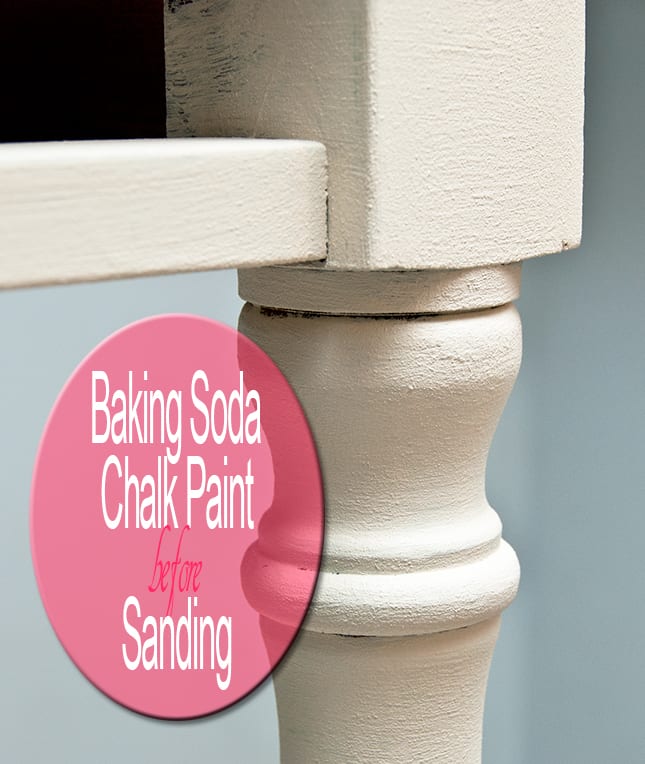
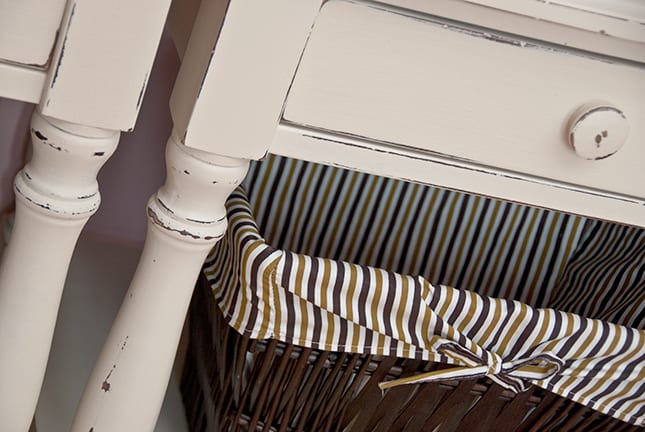
I was worried it wouldn’t sand down properly, but it turned out just fine…. whew! Here’s what it looks like after the final sanding/distressing.
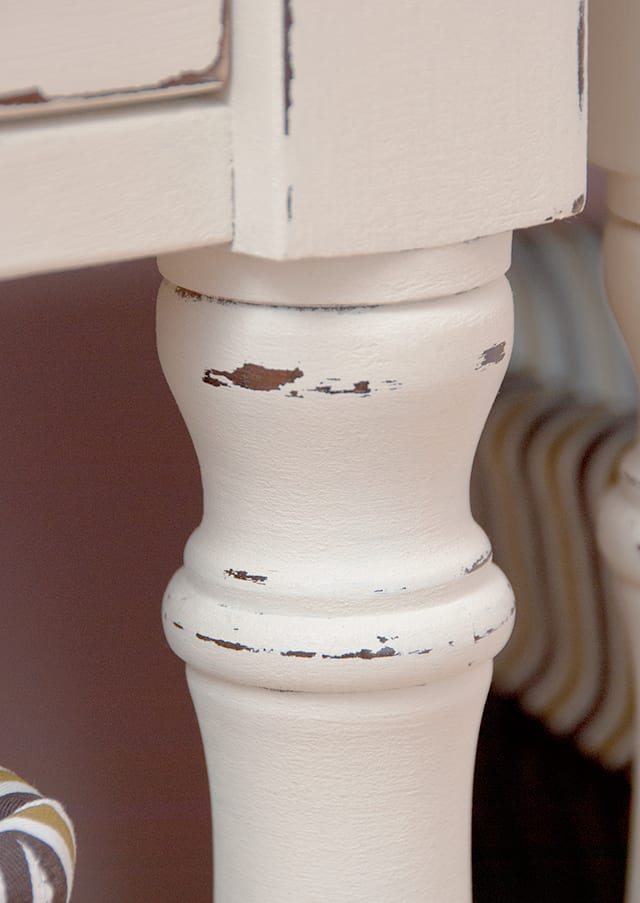
Although Baking Soda Chalk Paint is listed last on my countdown, it’s perfect if you’re trying to achieve an old weathered, distressed “country” looking piece of furniture.
Deana at Alchemy Fine Living has a great video showcasing a dresser painted with the Baking Soda Chalk Paint Recipe.
Baking Soda Chalk Paint Cost – $1.69 for a box of baking soda which can be used for another 5 single chalk paint recipes + cost of latex paint
Time Involved – No time was spent on the purchase because I always have baking soda in my kitchen. 2-3 minutes to mix it thoroughly into the paint.
Application – Grainy look and feel even when mixed thoroughly.
Adhesion & Coverage – Great! No priming or sanding required and great coverage. Good coverage after 2 coats but I applied 3.
Odour – No odour other than the latex paint it’s mixed with.
Clean Up – Cleans up like regular latex. Not as easy as 100% green brand name chalk paint.
Distressing – Requires sanding. Not as effortless as brand name chalk paint (ie distressing with dampened cloth).
Finish – The finished look is chalky but not quite as smooth as brand name chalk paint.
 Non-Sanded Grout Recipe

1 cup Paint
2 Tbsp Unsanded Grout
Water to mix Grout
Number 3 on my list is the Unsanded Grout Recipe.
I mixed the grout with the water, then once smooth, added it to the paint. It looked and applied like a brand name chalk paint. It dried fast (within 1/2 hour), and the finish was just as “chalky” as the store bought.
It had a bit of a weird odour…ok…really weird. But because it was applying so beautifully, I wasn’t bothered by it too much.
Fabulous! … so why is it listed No.3 on my list?
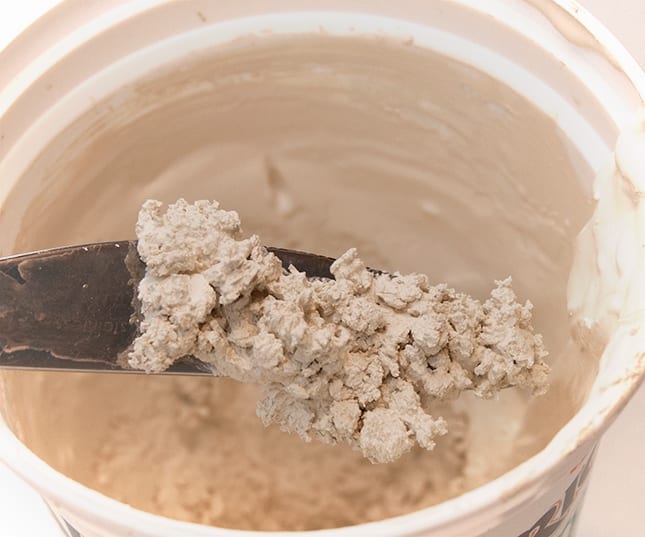
This DIY Homemade Grout version started to thicken up while I was applying my first coat…. it turned more like thick icing than paint.
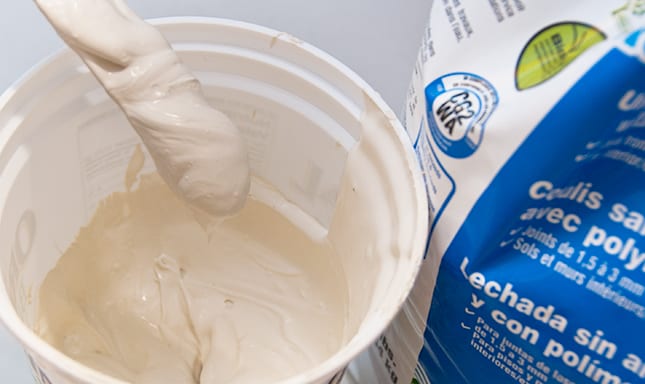
I had to keep mixing it while I was painting and eventually had to add more water because it was too thick. The next day it had really congealed and more water was needed. Take a look… it just kept turning into a thick mess!
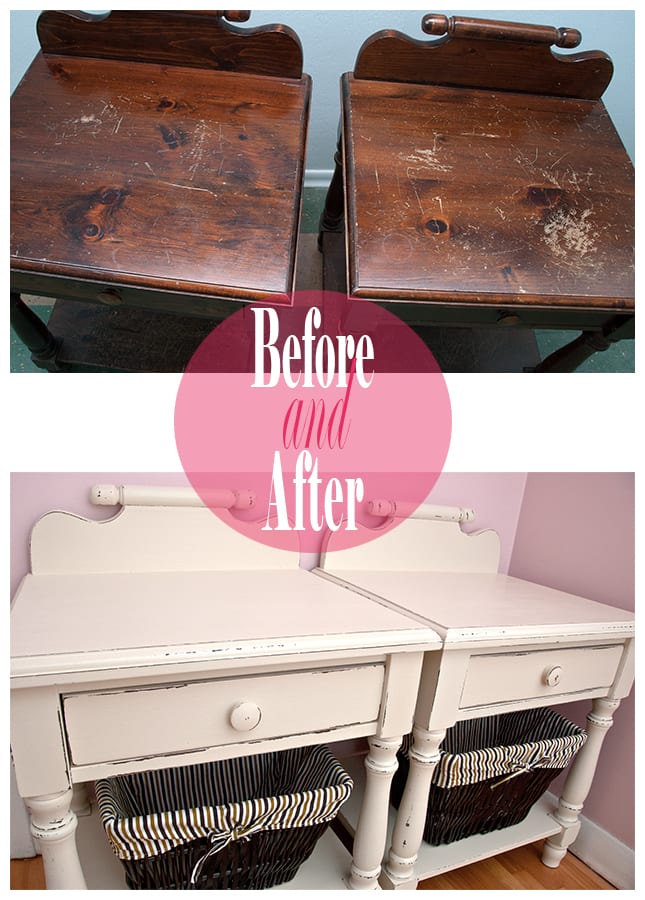
Here is the before and after. The table on the left is painted with Baking Soda HMCP and the table on the right is painted with Unsanded Grout HMCP. Can you see a difference?
Unsanded Grout Chalk Paint Cost – $17.99 for a large 10lb bag which will last a zillion single recipes + cost of latex paint
Time Involved – Easy to find Non-Sanded Grout on-line or at any Lowe’s, Home Depot, Rona, Canadian Tire or any on-line home reno store. Note – Grout comes in different colours. You want to buy white unsanded grout. Why? If you add a coloured grout to your paint, it may alter your paint’s hue. 3-5 minutes to measure and mix it thoroughly into the water and paint.
Application – Fabulous… until it started thickening up. Then time was spent mixing it and adding additional water to obtain the right consistency.
Adhesion & Coverage – Great! No priming or prep required and it had full coverage after 3 coats. The more water I added, the thinner the coverage.
Odour – It had a weird smell. I’d love to explain it to you but I don’t know what to compare it to?
Distressing – Requires sanding. Not as effortless as with a brand name chalk paint (ie rubbing with dampened cloth).
Clean Up – Cleans up like regular latex (brand name chalk paint cleans up much easier)
Finish – The finished look is exactly like a brand name chalk paint. Smooth, chalky and lovely.
 Plaster of Paris Recipe

3 parts Paint
1 part Plaster of Paris
Water to mix
My number 2 pick is the Plaster of Paris recipe.
I made a smooth paste with the plaster of paris and water before mixing it into the paint. When mixed well, it was silky smooth and applied just as nicely as brand name chalk paint. 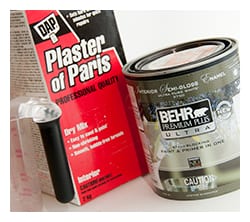
The second day it did thicken a little and appeared a little grainy, but after a thorough mixing it was fine.
The left over paint was stored in a glass pickle jar and used again 2 weeks later.
Plaster of Paris Chalk Paint Cost – $6.oo for a large box which will last for a looong time + cost of latex paint
Time Involved – Easy to find Plaster of Paris on-line or at any Lowes, Home Depot, Rona, Canadian Tire or craft store. 3-5 minutes to measure and mix it thoroughly into the water and paint.
Application – Fabulous! The consistency was great and it applied like brand name chalk paint.
Adhesion & Coverage – Great! No priming or prep required. Applied 3 coats for compete coverage.
Odour – None other than the latex paint used.
Distressing – Requires sanding. Not as effortless as with a brand name chalk paint (ie rubbing with dampened cloth).
Clean Up – Cleans up like regular latex (brand name chalk paint clean up is much easier)
Finish – The finished look is exactly like a brand name chalk paint. Smooth, chalky and lovely.
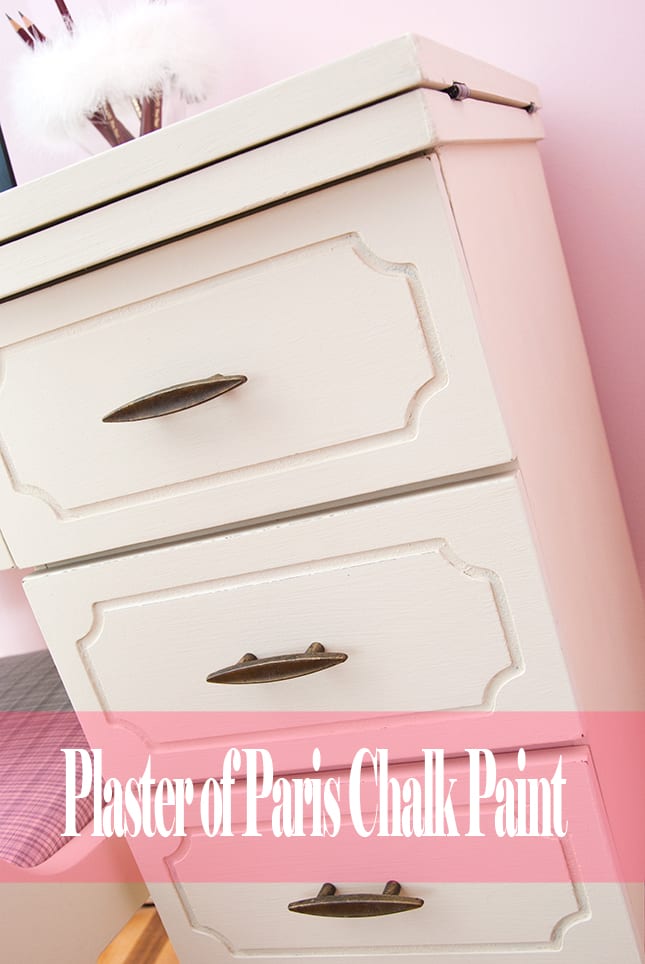
I used the Plaster of Paris Chalk Paint Recipe to re-purpose an old sewing table into a little girl’s desk. What do you think?
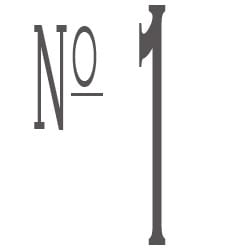 Calcium Carbonate
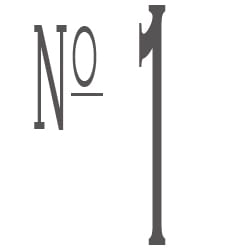
2 parts paint
1 part Calcium Carbonate
My hands down #1 choice was the Calcium Carbonate Recipe…which makes good sense since Calcium Carbonate is chalk!
It mixed into the paint easily, had the perfect consistency, coverage was fantastic, dried within 30 minutes, AND left me with a perfect chalky finish. I stored the left over paint in a yogurt container and it kept the same consistency for days. (I did stir it vigorously each time before use.)
The only downfall to my #1 choice was I had a difficult time finding it! Not many stores sell it in powder form and the pill form won’t work even if you grind them up.
My local pharmacy ordered it in for me and I picked it up 4 days later. Since then, I’ve found a good grade Calcium Carbonate On-line and will be ordering from the comfort of my home. 🙂
As I mentioned above, the Plaster of Paris recipe was used to re-purpose the sewing table into a desk, but I used the Calcium Carbonate Chalk Paint to paint the matching chair. Can you tell the difference?
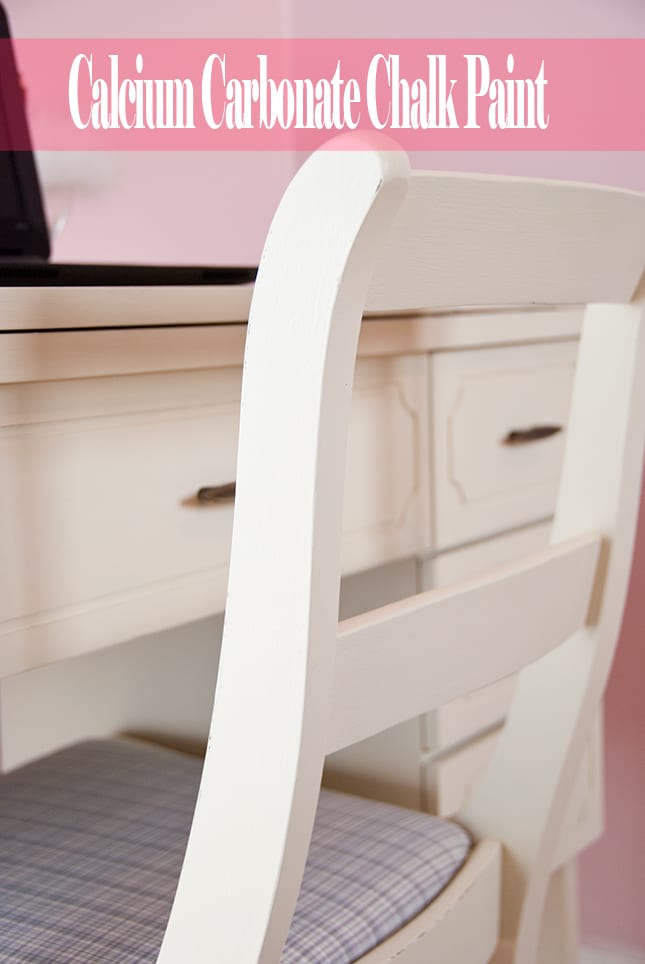
Calcium Carbonate Chalk Paint Cost – $11.99 for a 500g container which I’m almost finished. I’ve painted 1 chair, a large desk (NOT the one shown above) and 2 large chalk board frames. I have enough left over for another small/medium project. Out of all four(4) recipes, Calcium Carbonate is the least economical. However, comparing it to brand name chalk paints, the cost difference is still pennies on the dollar in this recipes favour! + cost of latex paint
Time Involved – Took me 2 weeks to track this stuff down! I searched Shoppers Drug Mart, Health Food Stores, Organic Stores and finally asked at my local pharmacy. Next time, I’ll be ordering it on-line! 3-5 minutes to measure and mix it thoroughly into the paint.
Application – Fabulous…exactly like brand name chalk paints.
Adhesion & Coverage – Great! No priming or prep required and the coverage was fantastic. It dried faster than the Plaster of Paris (within 20 minutes) because no water was added.
Odour – None, other than the latex paint used.
Distressing – Requires sanding. Not as effortless as with a brand name chalk paint (ie rubbing with dampened cloth).
Clean Up – Cleans up like regular latex (brand name chalk paint clean up is much easier)
Finish – The finished look is exactly like a brand name chalk paint. Smooth, chalky and beautiful!
So the Best Homemade Chalk Paint Recipe… Calcium Carbonate!
Although these HMCP recipes are not 100% green, the coverage and finish are VERY comparable to brand name chalk paints. In researching all my options, I also learned Wall Texture, Limestone and Whitening Powder can be used to make chalk paint.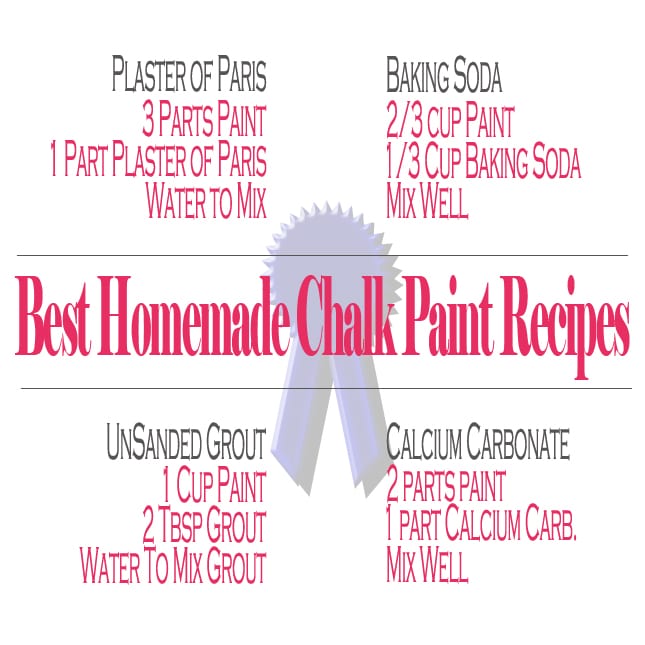
I wish I knew who to give credit to for the above recipes. Whoever originally came up with them… thank-you… absolutely BRILLIANT!!!!
Still undecided which DIY recipe you’re going to try? You can read more HMCP Tips here.
If you have a HMCP experience you’d like to share or have any questions, feel free to leave a comment and I’ll get right back to you!
Enjoy your day & happy painting.
Denise
 Hello again... I'm so happy you dropped by! Let's keep in touch! Follow me on social media or sign up for a dose of furniture painting inspiration and diy tutorials. :)
I found powder calcium carbonate on Amazon.com (US)… 1 lb for $12. Can’t wait to try this!!
I used the calcium mixture and found the texture a little gritty instead of smooth like Annie sloan. I did mix the mixture thoroughly,any suggestions?
Could it possibly be the “Grade” of Calcium Carbonate used Patricia? CC does come in different sizes/texture and is graded pending on the use. Feed Grade is the Calcium Carbonate humans and animals can take as a supplement. It can be purchased in a very fine powder. This is the CC I use in my HMCP recipes and the outcome has always been a nice smooth texture.
I used the powdery calcium carbonate available in the 60 lb bag at Lowes in Maui. It is used on lawns as a soil sweetener. I then took the mixture to a paint store to be shaken. It is still not smooth, its a little better but not smooth. Do you have any other suggestions to make the mixture smooth?
My suggestion would be to use “people” grade Calcium Carbonate. The Calcium Carbonate which is a VERY fine powder you can ingest as a supplement. I use this CC and have never had any problems. It comes out perfectly smooth. From what I hear from my readers, Calcium Carbonate for grass or other uses doesn’t work quite the same. Hope this helps and would love for you to check back in and let me know your results. 🙂
Ever since I heard that chalk paint has such superior adhesion, I’d like to do my kitchen cabinets with it (calcium carbonate recipe). I do not want to distress in this case: just want a really durable surface. But now I that I read that Annie Sloan chalk paint can be distressed with just a wet cloth, I’m wondering just how durable chalk paint really is? Is the distressing perhaps done while the paint is still wet?
Much thanks for the great article! It can potentially save me substantial amount of money in household renos especially if I find it a good choice for doing an outdoor deck as well.
That’s correct Susan. Brand name chalk paints are easily distressed with a wet cloth once the paint HAS dried. You can then you seal it with wax or polyurethane. Due to the latex paint component in HMCP’s, distressing requires sanding. If you are going to use it on high traffic areas such as cabinets, I would NOT use wax but rather a hard/easy to clean lacquer, shellac or polyurethane.
Do you sand between each coat?
No, I don’t sand between each coat when painting with chalk paint. I typically sand with a 220 and 400 grit sandpaper after I’ve applied all my coats and before applying my wax.
You could also purchase the large bags of marking chalk used to mark baseball fields. It is also calcium carbonate. $10 for a 50lb bag.
Hi Denise,
I just stumbled upon your site. Thank you so much for sharing this. I am just about to start my journey into chalk paint and I’m very excited!
I’m going to try the CC method and just wanted to know how you mix it up. Do you put the CC into water first and then the paint and what would the ratio for that be please?
Thank you again,
Zera
Hi Zera. No water is needed. You add the CC directly into the paint at a 2:1 ratio. 2 parts paint to 1 part Calcium Carbonate. Enjoy yourself…it is exciting!
Great post…thank you so much….soooo usefull!!
I have only recently discovered chalkpaint, and for my first project I used a branded one, but I have just finished my second piece, using the plaster of paris receipe….and actually preferred this!! I am currently posting on my blog(http://nostalgiecat.blogspot.co.uk) about learning to use new paints and techniques, and would love to link back to this post if you don’t mind…
june
Of course, and I appreciate you dropping by June. Glad you found it useful! 🙂
Do I have to remove varnish before using these (especially before using the baking soda recipe)?
Technically NO. You should not need to remove varnish, poly or even a waxed surface before painting with chalk paint. Brand Name & HMCP’s adhere to most any surface including shiny surfaces such as glass, mirror, metal etc without even having to prime! Having said that, if in doubt, you can performed a “test” area on a small inconspicuous area of your furniture. If your Baking Soda Recipe is not adhering properly, a light sanding will do the trick.
Someone may have mentioned this as I haven’t read all the comments. I sent my hubby to buy some calcium carbonate and he came home with a 25 lb bag of it ! They use it to chalk the lines for baseball, soccer fields! Much cheaper too!
Hello Denise,
I tried to ask an honest question but my post was deleted. I’m sure this was in error so I will ask again.
First of all, thank you for such a great blog. My family and friends are sure to hear about this.
My question is…do you have a favorite wax that you prefer and is there a specific brush that you suggest after painting with chalk paint?
I have decided to go with the plaster of paris since its easier for me to find and it seems to last for a few more projects.
Thank you for your respond!
God Bless
I really enjoy working with CeCe Caldwells eco-friendly wax. It’s buttery soft and so easy to apply but it is quite costly at around $30. I also use Minwax Furniture Paste which gives a great finish (not all natural and does have a bit of an odour) but is considerably less expensive at around $12. I usually apply my wax with an old rag, not a brush. The few times I used a brush, I used the cheap dollar chip brushes you can buy at any craft store. I just finished a coffee table with the Plaster of Paris HMCP recipe and it turned out beautifully. Great choice Maggie!
What a great Blog! I think I am going to try the plaster of paris since its readily available and not a humongous difference. What is you #1 favorite wax and do you happen to suggest a specific brush for waxing?
Thank you so much for your time!!!
Great article! I read somewhere that if you put a little vaseline on the spots you want to “sand” off before painting(for the shabby chic look), it makes sanding much easier (not as easy as the wet rag with the store bought chalk paint, but easier than sanding down to the wood finish). Have you ever heard of this, or better yet, tried it? Thanks!
Yes its really easy to do. Apply your base colour paint (the colour you would like to have “peeping” through) and once dry, apply Vaseline to the edges you will be distressing. Then paint your top coat colour. Once dry… sand. This will make it easier to distress. This technique also works great by rubbing on wax from a regular old candle!
I have found really cheap calcium carbonate powder in vet supply shop online. Do you think this is the same. Value Plus Calcium Carbonate 5kg
Cheree, if it’s “feed grade” in a very fine powder, I don’t see why it wouldn’t work. Having said that, I wouldn’t want to say for sure because I’m not familiar with this particular product. It may be a good idea to ask the retailer how it differs from Calcium Carbonate which people can take as a supplement. If any of my readers know of/or have used this product, feel free to help Cheree out and chime in with a comment. 🙂
Also, should the paint mixed with the plaster and water be to the consistency of pancake batter, or should the plaster and water be to that consistency before adding the paint?
I have a question about the plaster recipe. I made some chalk paint but had used plaster mix from Hobby Lobby. It seems to be peeling. Do you think it could be because I didn’t use the official “Plaster of Paris”?
Jennifer, I would use “real” Plaster of Paris rather than a “mix”. Also, the Plaster of Paris should be mixed thoroughly with water (to the consistency of a batter) before adding it to your paint.
Hi there,
Did you find you had to sand the Plaster of paris & Ca Carboante to get a smooth finish or was it already smooth without sanding? Also, my plaster of paris chalk paint although smooth at first and great, I get hard lumps forming in it after awhile. Did you get this? Thanks
Hi Carwyn. Yes I always sand after painting regardless of what hmcp recipe or paint technique (ie spray gun etc) I use. This ensures a smooth “professional” finish before applying a protective top coat. And yes, I did find the grout can get lumpy. I had to keep mixing it and adding a little more water. I do prefer working with the Plaster of Paris or Calcium Carbonate because I don’t have to worry about it thickening and getting lumpy.
I found this site quite by accident while I was looking for ideas on how to paint a bedroom set I had purchased from an estate sale. Not being too crafty – I wanted easy! I knew I wanted a white finish – and the recipe with the calcium carbonate was perfect. My husband purchased 2 one pound bags at the local beer/wine maker’s suppy shop for $3.99 each & I paid $12.00 for a can of flat white paint! All 4 pieces came out great! I removed the brass knobs/pulls & sprayed painted them a satin nickel finish – looks perfect in our lake house!!
If I can do this – anyone can!! Thanks so much!!
FABULOUS Christine! Thanks for taking the time to leave a comment on your diy transformation!
Hi There
I can’t see in these recipes what kind of paint I should be using? Emulsion? Gloss? Eggshell?
Thank you
Yes, a water based paint (emulsion/latex) with the lowest sheen possible ie flat/eggshell.
Thank you so much for sharing your top four chalk paint recipes:) I have the name brand’s wax, I can use this wax with the HMCP?
I can’t wait to make the paint and start/finish my projects!
Yes Angie, you can use ANY brand of wax with the HMPC. 🙂
So a really close friend of mine is giving me her grandmothers dresser and vanity it’s antique and georgeous. But it is the solid dark wood and I would love to paint it and make it look a little aged but I have no idea where to start or what to do or not do. I have a picture of the furniture and of what I would like it to look like but I have no idea how to upload it on here. Please help I would hate to ruin her grandmother furniture :/
Angelica, are you familiar with how to attach a file via email? If so, feel free to send your pics to salvagedinspirations@gmail.com and I will gladly help you and provide a few tips.
Hello! Thank you so much for your evaluations of different homemade chalk recipes! For my first venture in using chalk paint, I decided to go with the Plaster of Paris (bought generic brand at Hobby Lobby – cheap, cheap!). I love how easy the whole process has been….my only complaint is that the paint on my brush got a little thick and ‘gloppy’…..is there a way to prevent that?
Mixing vigorously before each use or adding a little more water should help with the thick/gloppies. (I like this “gloppy” word Denise…lol) Don’t be afraid to fiddle with your recipe so the texture is perfect for your application. 🙂
Thanks for the recipe. I was wondering how to remove the chalk paint; if it would be an easier process than regular paint?
Leila, hmcp or brand name chalk paint is known for it’s superb adhesion to almost any type of surface. It can even be used outdoors because of it’s durability. Because of these great qualities, removing chalk paint is NOT any easier than regular paint.
Hi there from Spain!!
Denise, I was about to order Annie Sloan´s chalk paint and you´ve just saved me a few bucks! I´m definetly trying the plaster of paris recipie first! I have so many things to apply onto!
Thank you so much!
Thank you for all your information on chalk paint – very handy!! I’m just about the last blogger evah to make some up but will do soon, and I’m going to use the calcium carbonate recipe (I hope I don’t have problems finding it too!). Thanks again and I have this linked to my chalk paint DIY post too today!
ooooh Heather…can’t wait to see what your creative self comes up with! Have fun, I think you’ll really enjoy working with HMCP!
I’m going to try this!! How much calcium carbonate did you buy and did you wax the furniture afterwards?
I purchased a 500g container of cc which covered the 4 projects listed above. Yes, I did wax the furniture afterwards as it does require a protective finish.
Home Depot in Vancouver!
Thanks for simplifying the process.
Calcium carbonate powder is available at
the garden center at Home Depot.
$8.00 for 22kgs
Thanks heaps for the recipe. Not sure if it is the same in the US but in Australia you can get calcium carbonate from the animal produce store as it is used as a calcium supplement for horses. Only cost me $5 for 2 kg.
You’re very welcome Sharyn and thanks for the tip!
Love your work and tests. They’re very useful, and I’m starting my own chalk paint adventure this weekend 🙂
I was wondering though. At the danish retailers website it says, that the “new” Annie Sloan “Old White” is made from a mixture of chalk and gesso, which you can make yourself also.
The gesso are supposively made from a mixture of white glue, Plaster of Paris, or something similar, and ordinary latex or acrylic paint.
Al mixed together, chalk, gesso and paint, should make the “Old White” by Annie Sloan.
Do you have any experience with that kind of mixture as well?
🙂 Thank you for your inspirational work.
Diana (Denmark)
Hi Diana from Denmark! I haven’t tried this gesso mixture. Call my lazy but I like to keep things as SIMPLE as possible 😉 and adding any 1 of the above ingredients works beautifully. Wishing you all the best with your chalk paint adventure this weekend. I’m sure it will turn out fabulous!
Hi, I actually called the distributor (Toronto Salt & Chemical) in Brampton and he supplied me with a retailer in Scarborough-although the distributor was willing to sell to me direct for $6 and change. You can grab a 50lb bag (MINIMUM) from Marchant’s School Sport for just under $11. Schools use it to mark soccer fields and such.
Cheers,
Susan
ps….I LOVE YOUR SITE!
Great info Susan. Thanks!!
Hi there,
Firstly, thanks for such helpful tips with the chalk paint. ASCP costs a fortune in the uk. With the Calcium carbonate recipe do you just add the powder straight into the paint or mix it in water first? Thanks again.
Hi Carwyn. ASCP is pretty costly here also. With cc, you add it directly into the paint. No water required.
Hi Denise, I did manage to source the calcium carbonate in Toronto for a very reasonable cost of just under $11. The down side was the minimum quantity was a 50 lb bag. Just thought I’d let you know.
Thanks Susan! A 50lb bag for $11 bucks..where in T.O?!
Im just wondering about the the calcium carbonate you say 2 parts paint one part calcium so just say i use 200ml of paint and then i would use 100gr off calcium is that right thankyou for your help
Shaine is this a trick question…lol. If you were to use 200ml of paint, you would then add 100ML of cc (not 100 grams ~ I realize this was probably a typo but thank you for keeping me on my toes!) 😉 Another example of a 2:1 ratio would be 3 cups of paint to 1.5 cups of calcium carbonate.
First….thank you!!!!
Second…I found the calcium carbonate at Pottery Supply House on-line and they ship just about everywhere…I think they are located in Kitchener, ON….would make a great road trip to pick up a couple of bags and then stop at St. Jacobs 🙂
You have a new blog follower 🙂 Not sure my husband will be too pleased tho…lol
Thank YOU for the info! I always visit St.Jacobs in the summer. Who can resist the Farmers Market and all the quaint little shops. You just gave me another excuse to hit that area. Not sure M-M-M will be too pleased…lol
Egg shells are 80% calcium carbonate. I grind egg shells in an old coffee grinder to make a phosphorus binder for use in cat food, but I wonder if it would work to make chalk paint? It comes out as a very fine powder. I have not tried it yet…
Me neither, but very interesting Marijke!
Hi Denise,
Living in the Netherlands i am not quite acquainted with the paint-terminology (calcium carbonate i do have since i am a ceramist), but i was wondering: do you use the same paints for walls and wood furniture for both purposes? Or do you use latex wall paint for walls and latex wood paint for the furniture?
Thanks and regards, Marion
Hi Marion from the Netherlands!! For these chalk paint recipes, I used regular left over latex paint which I had used to paint my walls. A flat/matte latex works the best!
Thanks Denise!
Any time….my pleasure 🙂
What did you use if any for wax or sealer after you painted?
CeCe Caldwell’s Clear Wax. I’ve also used Minwax as a less expensive alternative.
Thanks for taking the time and effort to compare the four types of homemade chalk paint. I just started chalk painting this winter and the only type of chalk paint I have used was the Calcium Carbonate. I found it on Amazon. I ordered a large box. Don’t recall what I paid for it but I believe it was reasonable and will last me for a few years. What I ordered was 97% food grade so it is non-toxic and has no odor at all. I added it to the leftover latex paint we have leftover from painting the rooms in our house. I’ve been happy with the results.
Hi Everyone
Try Saddlery/horse supplies. I found food grade calcium carbonate there as it is used to mix into horse feed. Thank you for the great info on this page.
Fabulous!!! Thanks for taking the time to give us such detailed information! Out of curiosity–do you apple a wax finish after the paint dries?
Hi Pamela, thanks for visiting!! Yes, I do apply a wax finish.
Hy! Which colour did you use to mix with c.carbonate? Acrylic? Or?
I used a left over paint I had on hand Ivona. C-I-L’s Dulux Premium Acrylic Eggshell in Jersey Cream.
Thanks so much for sharing!! I’ve been wanting to try chalk paint for a while but it is not available here in the Philippines. Now I’m excited to try to plaster of Paris recipe. I just have a question… How much water did you mix with the plaster of Paris to get the right consistency. 🙂
Jenn, it will depend on how much Plaster of Paris you use for your recipe. Add water slowly until you get the consistency of pancake batter…the only thing I can think of to compare it to…lol.
Thanks for this handy info and for your experience! I was wondering what finish of latex paint do you use to mix with the plaster of paris (until I can find calcium carb.)? Semi-gloss? Flat? super flat?
and how soon do you glaze it after painting?
Thanks so much
Hi there Lauren. To get the best chalky finish, I use a flat/matte latex when mixing any of the above recipes. I have used semi-gloss and it does work; however you do feel the ‘latex-slide’ while applying it and the finish is not quite as flat/chalky. When time permits, I like to wait 24 hours before applying my finish…doesn’t always work out that way though…lol. Just make sure the paint is really dry, which in the case of chalk paint doesn’t take that long. Glad you found the info handy.
Hi Denise
Thank you so much for all the types of chalk paint and for sharing it with us..I did just order a sample pot of Annie Sloan which I haven’t received yet. I am over in England and I’m hoping to try your calcium carbonate after looking at the way yours items have turned out. Just hope I can get the calcium carbonate here, I think what you have as latex paint is called emulsion over here so hope it turns out as nice as yours as I’m only a beginner(You look like an expert painter going by your pictures.). Probably won’t be able to purchase the wax over here as we are a bit behind the times. Thanks again.
Yes, latex/emulsion are the same thing! Good luck with your painting Sandra and feel free to let me know how everything turns out for you!
Hi Denise,
I used limestone which I bought on Ebay but it was very grainy, almost like a fine sand. And, I mixed it with a electric mixer. I didnt like it at all,so it will be used on outdoor plants.
It must be that you have to use food grade calcium carbonate which is Now foods calcium carbonate.So, I have ordered some more as it works perfect.
Rita
I’ve never tried using limestone for HMCP so thanks for letting me know Rita. I’m sure your plants are going to be very happy 🙂 And yes, the calcium carbonate can be used as a dietary supplement.
Hi,
I painted 2 pieces with home made chalk paint using calcium carbonate and they look good.
However, trying to find a bulk source in Canada is nye to impossible. I have tried hardware stores, garden centres and cannot find limestone powder which is calcium carbonate. I have tried online to ceramic stores but Canada does not seem to have it. Amazon.com will mail it but the S&H charges are very high.
So, I am wondering with all the primer and paint in one such as Natura, no odour, low VOC if this is not just as good, and chalk paint is just a trend we feel we want.
Its funny that it is hard to find ordinary limestone powder as it is used for plants. But, it seems to be in pellet form.
Does anyone have any suggestions?
Thanks.
I had a hard time finding the Calcium Carbonate too Rita. Try asking your local pharmacy to order in the powder form for you. Once ordered, it only takes 1 to 2 days to arrive. You can also try e-bay.
Chalk paint has been around forever, but I do agree that in the “blogging” community, it has become “trendy”. I use paint and primers all in one quite often, but it doesn’t provide quite the same finish as chalk paint. I always look at the furniture I’m refinishing and then ask myself which finish would look best.
I love your post. You always have some great ideas and I really like the way you do your furniture.Thanks for the info. I will keep trying to find a inexpensive supplier.
Thanks for the compliment Rita 🙂
Wow what great info. I’m in Australia and discovered by the magic of google that calcium carbonate is available here cheaply from pet supplies wholesalers. Apparently it’s a dietary calcium supplement for dogs! About A$6 for 1 kilo bag. I’m off to buy my first up cycling project ASAP! Thanks for such an informative comparison of recipes.
I found some, here in Ont, and it was at a local hardware store .. most TSC stores also carry the stuff, but it will be in the back and you have to ask for it. (20 KG bag for $15.99 – seems like a good deal to me!)
I am excited to try!
Most farm supply stores carry calcium carbonate in the form of Oyster shells for laying chickens. It’s sold in 50lb bags for about $12.
It’s coarsely ground so you would need a mortar and pestle to grind it smooth but the costs savings seem well worth it compared to those drug store prices.
Hi there..
What kind of wax did you use for the finish?
thanks,
Sue
Hi Sue, I used CeCe Caldwells 100% Eco-Friendly Clear Wax for the above. However, I often use Minwax Paste which is a less expensive alternative.
here is a site for bulk cal.car. $7.95 for 1 LB and free shipping. http://www.dudadiesel.com/
Thanks for the link Cindy.
Thanks for the article. For those looking for Calcium Carbonate, you can buy it in bulk at your local Ceramic/Pottery supply. It’s used in ceramic glazes. Most major cities have a ceramic supply. Call them up and ask how they sell it (i.e. by the pound, 50# bag, etc)? Please note, these are not hobby stores like Dick Blick, Michaels, JoAnns, etc., but specialty stores for ceramic artists. They usually have the best prices on the stuff because they buy it in bulk.
Thanks Steve, that’s a great tip… I never would have thought to check out Pottery Supply Stores.
I found calcium carbonate at a ceramics supply place, and it’s $6.00 for 5 pounds.
I am going to paint a cabinet using homemade chalk paint with calcium carbonate. I ordered it online from Well.ca, but do you know another place?
I can hardly wait to try it.
Your projects look great!
Thanks so much Rita. I purchased my calcium carbonate powder from my local pharmacy and I’m quite sure any pharmacy can order this for you. So easy and I picked it up within 2 days. The next time I purchase I may stock up at amazon.com http://goo.gl/QsXoU (oddly enough I couldn’t find it on amazon.ca??) Good luck with your project and let me know how it turns out for you!
ebay! I bought some and my friend bought some. Both of us in different towns received our package and it has been opened and inspected by postal service. Maybe because it is a white powder? I love this receipe using the calcium carbonate.
Well now I’m going to have to run out to the thrift store and find something to paint! 🙂 Thanks very much for sharing this…I LOVE finding new ways to play with paint.
Be careful Danielle…it can become addicting and the next thing you know you’re an up-cycling fanatic like me…lol! Thanks for dropping by!!
My wife and I are thinking of doing our hardwood floors with chaulk paint (homemade). Any suggestions on what would be the best ingredients for a long lasting finish.
John
John, for floors I would use the Grout or Plaster of Paris recipe simply because these are the hardest to distress out of the 4 recipes above. Before you start painting the entire floor, sampling your HMCP in an inconspicuous area is a good idea. If you see any bleed-through, 1 or 2 coats of shellac or shellac based primer may be required. Also, depending on how much traffic the floor gets, up to 3 coats of poly or lacquer will seal it beautifully. Hope this helps.